Business Summary
The trade fair company Messe Düsseldorf is expanding its existing B2B marketplace for exhibitors with an AI-based recommendation system that smartly combines data from previous orders with analyses of exhibition stands of a comparable size. Instead of placing time-consuming new orders, exhibitors now receive structured suggestions for their trade fair presence. This means the order is now just one click away.
Together with the AI experts at dotSource, data models were structured and a high-performance Azure-based AI infrastructure was built for this purpose.
The result: In less than three months, a market-ready solution was implemented that now delivers automated, consistent product recommendations.
Exhibitors can now place orders much more easily and quickly, which means significantly increased sales potential for Messe Düsseldorf.

Client | Messe Düsseldorf GmbH |
Industry | Trade Fairs |
Technology | Azure AI Search, Azure SQL Database, Python, FastAPI, LangChain, LangGraph |
Focus | Artificial Intelligence, E-Commerce |
How Messe Düsseldorf Benefits from the AI Project
for Messe Düsseldorf employees
for all exhibitors
of the trade fair through new upselling and cross-selling potential
with matching product combinations and quantities
of special logic and prioritised products
for further AI-powered automation of the product and service portfolio
Project Overview
About Messe Düsseldorf
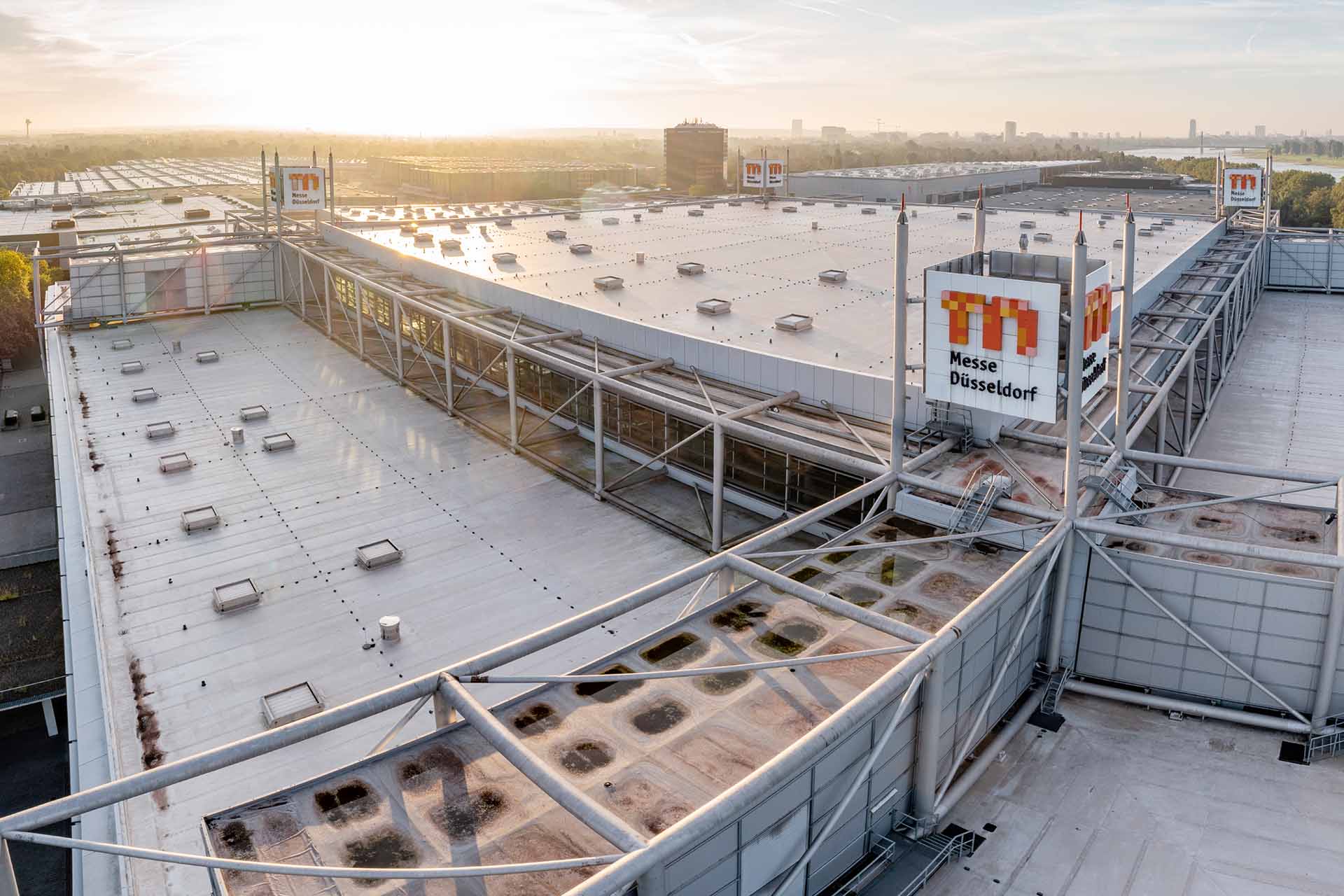
As one of the world's five most successful trade fair organisers, Messe Düsseldorf brings people and markets together. The foundation of this success is its ultramodern exhibition centre with more than 260,000 m² of space and 18 exhibition halls, as well as a comprehensive network of service partners covering all the services required for successful trade fair appearances, from catering and photography to rental furniture. In addition, Messe Düsseldorf has 78 international representatives in more than 140 countries.
Initial Situation
The exhibition company was already offering exhibitors a central B2B marketplace, which was implemented together with dotSource on the basis of the SAP Commerce Cloud. This platform can be used to book exhibition stands, including technical equipment and services. However, the complex requirements meant that repeat orders for stand accessories and services often had to be coordinated manually.
Traditional recommendation approaches were not sufficient to reliably map the large number of changing products, stand configurations and service partner offerings.
Challenges
The recommendation of perfectly suited products and product combinations has to consider numerous factors such as the respective event, new stand sizes and changing service partner offers in addition to previous orders. To achieve this, the existing SAP Commerce platform would continue to be used and enhanced with user-friendly AI functionalities.
Particularly challenging was dealing with product-specific rules and dependencies – such as minimum order quantities or year-dependent availability. These had to be translated into clearly modellable special logics while still remaining flexible for future adjustments.
Using Azure Technology to Create an AI-Powered Product Platform
Consulting & feasibility check

Together with Messe Düsseldorf, dotSource’s expert teams examined the extent to which AI-based recommendations could be implemented using the existing data and what level of effort this would involve. On this basis, the decision was made to implement a solution based on the Microsoft Azure AI stack.
Data preparation & new data models

The existing order and product data from the SAP Commerce platform were restructured in a new Azure SQL database and supplemented with statistical parameters. This formed the basis for making it possible to analyse historical orders together with information such as the size and location of the exhibition stand as well as current product availabilities.
Azure infrastructure & AI models

Azure OpenAI models and the powerful Azure AI Search have been integrated into the Azure environment. Product and order data are prepared in such a way that the AI does not only find exact matches: semantic product search also recognises content-related similar items as relevant and suggests them.
Agentic Chain for product combinations

In an agent chain, multiple AI models generate logical product combinations by interacting with one another and even add missing items. Factors such as the exhibitor’s industry, as well as stand size and location, are taken into account, and suitable suggestions for combinations of furniture, technology or other service areas are generated.
Integration into the B2B marketplace

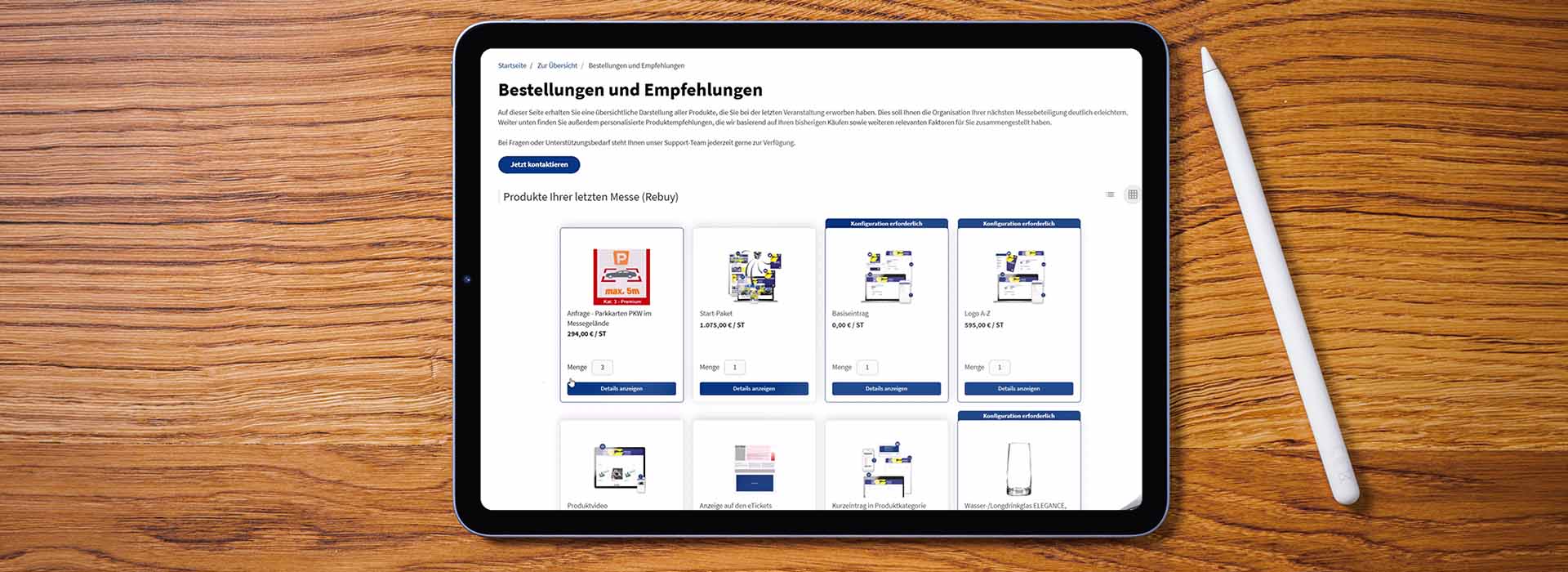
Via API interfaces, the recommendations are technically integrated into the existing SAP Commerce platform and available in the exhibitors’ account area. The UX design team at dotSource developed a prototype of the corresponding page in advance in order to present the order recommendations to exhibitors in a user-friendly way.
Iterative process & fast feedback loops

The implementation was carried out in short iterations with regular demos for Messe Düsseldorf’s project team. This allowed direct feedback to flow straight into adjustments to the AI logic, specifications and product prioritisation. After less than three months, the idea that had been conceptualised together was already ready for productive use.
Project Deep Dives
Complex products – nothing for a recommendation engine
The requirements of the trade fair go far beyond traditional “Customers who bought this also bought” logic: offers are provided via service partners, without a standardised product catalogue, but rather as heterogeneous data structures with many variants, designations and special logic. At the same time, the individual events differ greatly in their topic and timing. Depending on the sector, stand area and location, exhibitors also have different requirements.
Conventional recommendation engines could not map this combination of data diversity, contextual factors and dependencies.
Preparing and analysing data with AI
The basis of the new system is a custom-developed data model by dotSource. Orders, products and availability information were transferred from the SAP platform to an Azure SQL database and structured there. AI was used to add additional information about the events and create product categories in order to make the data more searchable.
Historical orders are analysed using SQL queries and Azure AI Search to find, for example, suitable alternatives when previous products are no longer available to order. Statistical frequencies and top sellers are taken into account, as is the exhibitors’ order history.
AI chain makes recommendations »human«
AI recommendations should come close to expert (human) advice. Based on previous orders, statistical patterns and AI-powered categories, product combinations are suggested to the user that cover typical needs in areas such as furniture, technology or catering.
A chain of AI agents (agentic chain) identifies useful additional services, then searches the relevant categories for frequently selected and logically fitting products, and validates these results once again at the end. This creates suggestions for exhibitors that round off the overall picture of the trade fair presence with »common sense«.
AI recommendations for a strong customer experience in B2B
With the new AI-based recommendation system, Messe Düsseldorf has implemented a specific use case that noticeably reduces the complexity of trade fair orders for exhibitors as well as advisory effort.
The combination of a structured data foundation, Azure AI stack and an iterative approach results in a solution that can be used directly within the familiar ordering process – including scope for future enhancements.
Benefit from Tailor-Made AI Solutions
- Specific use cases, tailored to your respective business model
- Integration of smart AI features into your existing commerce and service landscape
- Measurable relief for your teams through automated processes
- Consulting and implementation from a single source – from model selection and data basis to AI integration