

Facts and Figures: Why Cloud Migration Consulting Matters

of companies in Germany
already leverage cloud computing. Cloud has long since become a business-critical foundation.

are forced to use cloud services
because software is only available as cloud-based solutions.
consider Germany too dependent
on US cloud providers. Digital sovereignty emerges as a top priority.
Source: Bitkom Research 2025
Why Partnering with dotSource for Cloud Migration Is Worth It
Benefit from a target architecture that integrates your systems intelligently and factors in future digital projects from the outset.
Your cloud migration is based on cross-industry experience from projects for SMEs and large enterprises – backed by a strong client portfolio and proven best practices.
You receive a clear recommendation as to which cloud providers match your compliance requirements, performance expectations and budget.
Your migration project is broken down into clear stages, milestones and fallback scenarios, making sure that systems keep running while applications and data are gradually moved to the cloud.
Data protection, industry requirements and exit strategies are built into the architecture and operations from the very beginning.
Services: Turning Cloud Migration into a Structured Process
1. Clear Picture of Your Current System Landscape

Together with you, we analyse applications, interfaces, data flows and dependencies, including risks, quick wins and priorities for every migration decision. This provides the basis for cloud migration services that fit your reality.
2. Cloud Strategy and Migration Roadmap

In strategy workshops, a coherent strategic vision for your cloud landscape is developed, including migration approaches (e.g. lift and shift, replatforming, hybrid cloud), prioritised workloads and a realistic roadmap for all migration waves.
3. EU Cloud Readiness and Compliance
You receive an assessment of how EU cloud options and hyperscalers can be deployed in your regulatory environment – with a focus on data protection, data residency, operations and security requirements.
4. Architecture, Data Migration and Implementation
Based on the strategic vision, architecture, migration waves and data migration are planned and implemented. Applications and integrations are moved to the cloud step by step – with clearly defined testing, fallback and rollback scenarios.
5. Testing, Launch and Enablement of Your Teams

Load and functional testing make your launch a success. Moreover, your IT and business teams are empowered to use new cloud services (e.g. databases, storage, monitoring) in day-to-day operations and refine the environment on their own.
Next Step: Cloud Migration Consulting Session
Your Contact for Further Questions

You Will Hear from Us Soon
- Our experts will take your enquiry and get back to you within one working day.
Where to Migrate? Cloud Providers as Landing Spots



EU Cloud and Digital Sovereignty with gridscale, OVHcloud, Scaleway, STACKIT and SysEleven
When data protection, data residency and digital sovereignty are the focus, European cloud providers come into play. They enable cloud operations within the EU and provide additional flexibility compared to purely US-based hyperscalers.
Global Scalability and Enterprise Ecosystems with Azure and AWS
For global scenarios, high scalability requirements or deep integration into existing enterprise stacks, hyperscalers such as Microsoft Azure and Amazon Web Services (AWS) are ideal. With them, you benefit from a broad portfolio of managed services as well as data and AI platforms.
Combination and Multicloud: EU Cloud Plus Hyperscalers
A mixed approach is often advisable – sensitive workloads in an EU cloud, highly scalable or AI-driven workloads with a hyperscaler. Together with you, we create multicloud scenarios that balance business requirements, compliance and costs as part of a viable overall solution.
Digital Sovereignty Starts with Your Cloud Migration
By opting for a cloud strategy, you determine how independently your business can operate in the years ahead. In your cloud migration, we do not treat digital sovereignty as an abstract concept – we translate it into practical decisions:
Which data may be stored where – and which EU cloud options or hyperscaler set-ups are realistic and compliant for your business?
How do you secure critical applications so that they continue to run reliably – even in the event of disruptions, outages or provider changes?
How do you stay in a position to move workloads and data out of a cloud environment without replatforming turning into a major project?
Cloud Migration in Practice: Selected Success Stories




What Is Cloud Migration Consulting?
Briefly Explained
Cloud migration consulting helps you move your existing IT systems to suitable cloud environments – in a structured, secure and cost-effective way.
Instead of shifting individual servers and applications on an ad hoc basis, it provides a clear plan for which workloads to migrate when, how and to which providers.
What It Is All About
- Understanding your existing IT and cloud landscape
- Creating a sound basis for decision-making
- Developing a strategic cloud vision that aligns with your objectives, compliance requirements and budget
What You Get
You know what role cloud should play in your IT strategy, which scenarios are worthwhile and which migration path you can embark on without putting your day-to-day business at risk.
Your Benefits with a Cloud Migration
A modern cloud architecture enables you to modernise applications step by step and roll out new features much faster. This allows you to respond more agilely to new requirements.
With usage-based billing, scaling and managed services, you can make infrastructure costs more transparent and reduce operational effort. This creates financial headroom for important projects.
Cloud platforms help you scale flexibly and set up an optimised infrastructure. This keeps business-critical applications running reliably – even during peaks in demand or periods of rapidly increasing usage.
Cloud environments make it easier to use analytics, data and AI services. Data from different systems can be consolidated and harnessed to support decisions and automation.
A clear cloud strategy brings together security and compliance standards, governs access and audits and maintains freedom of choice between EU cloud providers and hyperscalers, including exit strategies.
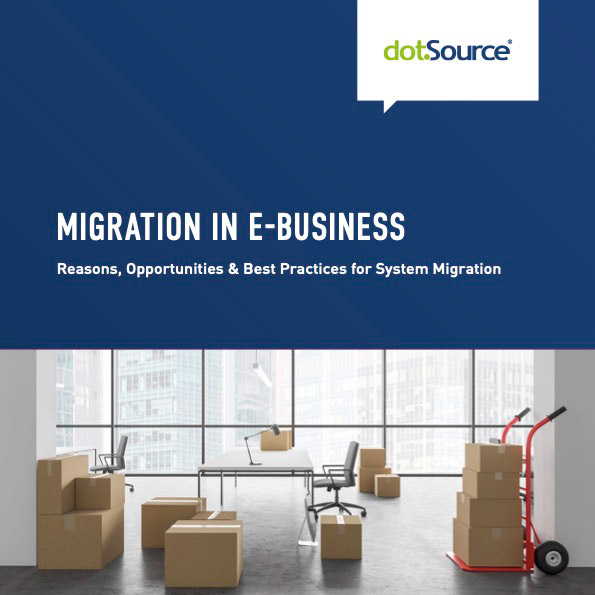
Further Building Blocks for Your Cloud Strategy

FAQ – Frequently Asked Questions About Cloud Migration Consulting
Do I actually need cloud migration consulting or can my IT team handle the migration process by itself?
Your IT team knows your systems and business processes. A specialist cloud migration service provider contributes experience from a wide range of projects and – through cloud migration consulting – helps shape a migration plan that is both robust and low risk. External expertise is valuable for architectural decisions, provider selection, compliance and best practices. This allows you to avoid poor decisions, costly detours and unnecessary risks in day-to-day operations.
How much does a cloud migration and the associated consulting cost – and what should I roughly budget for?
The costs depend heavily on the scope, system landscape and desired target architecture. Consulting provides transparency: Projects typically begin with a clearly defined analysis and strategy package. On this basis, you receive a reliable estimate of implementation effort, ongoing costs and potential savings.
Which cloud migration strategy is right for me (lift and shift, replatforming, etc.)?
There is no single »best« strategy that fits every situation. What matters are business objectives, time pressure, technical debt and compliance requirements. In many cases, a hybrid approach makes sense: Some systems are migrated using lift and shift, others are replatformed or modernised. Consulting helps you make these decisions in a structured and transparent way.
How significant are the risks involved in a cloud migration, particularly with regard to downtime, security and compliance?
There are risks, but they can be actively managed. A structured approach with clearly defined migration waves, testing, fallback and rollback scenarios minimises downtime. Security and compliance requirements are factored into the architecture, provider selection and operating model from the outset instead of being added on later.
How do I decide between an EU cloud and hyperscalers such as AWS or Azure?
The best fit depends on data classes, regulatory requirements, integrations and strategic objectives. A combination is often advisable, for example an EU cloud for sensitive workloads and hyperscalers for scenarios that require high scalability. Consulting provides a basis for decision-making that brings together technical, legal and commercial aspects.
When does it make sense to carry out an additional security assessment before a cloud migration?
An additional security assessment is particularly useful when the migration involves business-critical applications, sensitive data, a large number of interfaces or legacy permission structures. This makes it possible to identify vulnerabilities, misconfigurations and security-related risks at an early stage and take them into account in the migration strategy, prioritisation and safeguarding of migration waves.