
What is Salesforce Marketing Cloud?
The Salesforce Marketing Cloud is a platform for personalised customer communication that enables you to automate campaigns and centrally manage digital experiences across different channels.
The platform helps you address customers in a B2C context in a targeted, data-driven way throughout the entire journey. Content, timing and channels can be coordinated so that communication becomes more relevant and effective.
Particularly powerful is the platform wherever personalised B2C communication on a larger scale is required. This includes automated campaigns, recurring journeys and cross-channel communication via email, mobile or other digital touchpoints.
Do you need support more in the B2B area? You can find the right Salesforce solution here:
Agentforce, Marketing Cloud, Account Engagement – the right solution for your problem
Salesforce has renamed its portfolio several times: Marketing Cloud became Agentforce Marketing in October 2025; since September 2026, the umbrella brand has once again been called Marketing Cloud, while Agentforce now refers to the AI and agent layer.
Below that, the following independent products still remain:
- Marketing Cloud Engagement for cross-channel B2C communication (generally known as Salesforce Marketing Cloud),
- Account Engagement for B2B lead nurturing (formerly Pardot),
- Marketing Cloud Next as the newer generation based on Data 360.
If you come across a different name in older presentations, tenders or materials, it often refers to the same product.
As your partner, the product name is irrelevant. The starting point is the question of which problem needs to be solved and what your data and system landscape looks like today.
Because we operate across the entire Salesforce ecosystem, this also works in established landscapes in which several generations run alongside one another. This means you get the version that fits your application scenario, not the one currently being marketed most loudly.
What Salesforce Marketing Cloud offers you

Personalised communication
- Relevant content reaches your target groups more precisely
- The behaviour and interests of your customers flow directly into the way you address them
- Across all your channels, a consistent customer experience is created

Automated marketing processes
- Recurring tasks can be automated with less manual effort
- Your campaigns can be set up more quickly and delivered more reliably
- Your marketing team gains more scope for strategic topics

Stronger customer loyalty
- Plan your customer journeys strategically and continue to develop them
- Your content remains relevant across all key touchpoints
- This creates lasting relationships instead of isolated interactions

The features Salesforce Marketing Cloud offers you
Journey Orchestration
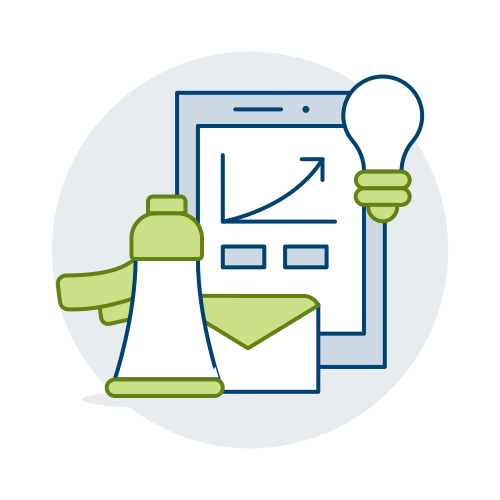
With Journey Builder, you can create automated communication journeys based on behaviour, timing or defined triggers. This makes it possible to guide contacts in a structured way across email, SMS and other channels.
This includes, among other things:
- Journey Builder for multi-step communication journeys
- Cross-channel orchestration within a journey
- Triggers and rules for automated responses
- Different paths depending on behaviour or target group
Segmentation and Dynamic Content

Salesforce Marketing Cloud helps you segment target audiences precisely on the basis of data and deliver content dynamically. This makes communication not only more personalised, but also more relevant in the respective context.
This includes, among other things:
- Segmentation by profiles, interests and interactions
- personalised content within campaigns
- Use of contact and behavioural data
- targeted communication based on defined criteria
Automation, Testing, and Reporting
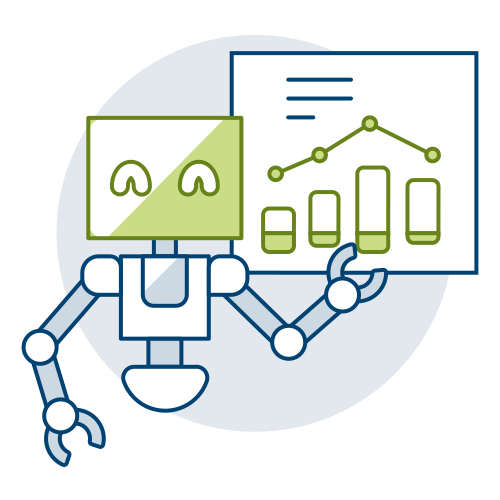
Mit Funktionen für Automatisierung, Testing und Analyse lassen sich Marketingmaßnahmen effizienter steuern und schrittweise verbessern. So wird aus einmaliger Kampagnenausspielung ein kontinuierlich optimierter Prozess.
Dazu gehören unter anderem:
- Automation Studio für wiederkehrende Prozesse
- A/B-Tests für Inhalte und Varianten
- Reporting zur Bewertung von Kampagnenleistung
- KI-Funktionen zur datenbasierten Optimierung
Not every feature solves your problem – together we'll find the right one
Real-World Examples of Marketing Automation and Customer Communication with Salesforce Marketing Cloud

Turning data into targeted customer communication
ELTAKO worked with dotSource to strategically strengthen the connection between CRM and marketing in order to make better use of customer data and establish marketing processes in a more structured way. Find out how the European market leader in switching devices, power supplies and smart home applications is further developing processes and creating the foundation for more effective marketing automation.

Greater efficiency for growing marketing structures
FUJIFILM maps complex requirements more efficiently and, with dotSource, is better able to scale communication processes as a result. Find out how structures in marketing can be professionalised in a targeted way when processes and systems work together seamlessly, and how Salesforce Marketing Cloud helps to make marketing more efficient and future-proof.

Turning touchpoints into a coherent customer experience
Berge & Meer personalises customer communication in a targeted way in order to address target groups more relevantly along the customer journey. Read how the Salesforce Marketing Cloud can be used to deliver more consistent customer experiences and more targeted communication across different touchpoints.

Learn more about marketing automation






Why dotSource Is Your Agency for Salesforce Marketing Cloud
- You benefit from more than 10 years of Salesforce partnership. Since 2016, we have been an official Salesforce Partner and are now certified as a Marketing Expert Partner in precisely the area of expertise that is crucial to your Marketing Cloud strategy.
- You benefit from mature expertise gained from more than 300 completed projects in the Salesforce ecosystem. Not only in the Marketing Cloud, but also in Service, CRM, data maintenance and content. Your campaigns are built on robust data and do not run up against system limits.
- Put your trust in 400 certified experts whose expertise ranges from customer data management to AI-powered customer communication. This means every project phase is covered by specialist expertise, from architecture and implementation through to further development.
- Work with a partner who is also responsible for the systems behind your marketing cloud. We deliver commerce, PIM and data projects every single day. As a result, your setup is integrated into the existing system landscape from the outset rather than being connected to it retrospectively.
Our Approach to Your Salesforce Marketing Cloud Project
- Target vision with KPIs for the first expansion stage
- Prioritised use cases and defined segmentation
- Initial journey sketches as a shared basis for discussion
- Roadmap with scope and binding milestones
- Origin and path of customer data
- Review of data quality and clear assignment
- Required customer characteristics and behavioural data
- System landscape with risks and dependencies
- Process flows for the key journeys with entry points and exit rules
- Data structures and segmentation rules
- Template set and naming conventions
- MVP backlog with governance framework and rollout plan
- Configuration of the Marketing Cloud and connected systems
- Tests at each expansion stage, from data quality to delivery
- Role-based training and playbooks
- Guided initial campaigns through to handover into day-to-day business
- Roles, SLAs and documented processes for regular operations
- Monitoring for data quality, deliverability and journey health
- KPI reporting as a basis for management
- Prioritised roadmap for additional use cases and channels
Let's Talk About Your Marketing Cloud Project
Your Contact for Further Questions

Our team will get back to you within one working day
- We will process your enquiry as quickly as possible and look forward to getting in touch with you!
We build your Salesforce platform with the following solutions:
 Salesforce Quick Start Commerce SolutionsGet Started Quickly with E-Commerce



FAQ – Frequently asked questions about the Salesforce Marketing Cloud
What is the practical difference between Salesforce Marketing Cloud and Account Engagement?
Marketing Cloud is designed for orchestrated, cross-channel communication with larger contact volumes. Account Engagement is geared towards B2B lead nurturing in a sales context, with close CRM handover to accounts and opportunities.
For your decision, this means: If you want to address very large numbers of people and guide them across various channels, Marketing Cloud is the right foundation. If, on the other hand, you are tracking individual prospects until a sales team closes the deal, Account Engagement is the better fit.
What prerequisites in terms of data and consent are needed for a meaningful start, and how should gaps be handled?
Valid opt-ins, a minimal profile structure and reliable events for triggers are required. Data gaps can be bridged through a streamlined старт model and clear follow-up data maintenance processes. Consent capture and synchronisation should be running reliably from the outset.
Put simply: without your contacts’ permission, you may not send emails, and without well-maintained customer data, every approach remains generic. Both can be set up properly at a later stage. The important thing is simply to factor them in from the very beginning and not try to catch up once the first campaign is already running.
How does Salesforce Marketing Cloud fit into existing systems such as CRM or shop systems without overloading IT?
We start with standard connectors and a clearly defined minimal scope that prioritises the most important data flows. More complex integrations are added in phases, with defined interfaces and responsibilities. This keeps IT manageable and the time-to-value short.
You do not need to have your own interface developed or involve your IT team for weeks. Marketing Cloud comes with ready-made integrations for Salesforce, shop systems and other systems. To begin with, we connect only the data that is genuinely needed for the first campaign.
Which tasks remain with our marketing team after go-live, and where does dotSource provide ongoing support as a partner?
Your team manages content, target-group logic and the ongoing development of journeys in day-to-day business. As a partner, we take care of integration maintenance, deliverability monitoring, governance and the implementation of new use cases as required, either as a sparring partner or through a managed service.
How is the total expenditure for a Salesforce Marketing Cloud project made up, and which factors drive the budget?
Budget is made up of licences and implementation, supplemented by ongoing operations. The main drivers are data complexity, integration effort and the desired functional scope. With a short scoping phase, we provide you with reliable order-of-magnitude estimates.
Which roles and skills does my team need to run the platform independently in everyday business?
Roles such as Marketing Operations Owner, Campaign/Journey Manager, Data & Automation Specialist and Admin have proven effective. Depending on your organisation, Analytics may be added. Through targeted enablement, we quickly make you operational.
Which AI functions deliver practical added value today and how can you get started with them pragmatically?
Quick wins include shipping time optimisation or recommendation logic for content and products. Start with a clearly defined use case, measure the uplift and then embed its use in your standards.
What timeframe should you expect from the start of the project to the first productive setup?
6–10 weeks is a realistic timeframe for discovery, setup and the first journeys, depending on the data situation and integrations. Further expansion stages follow iteratively on the basis of the initial results and a prioritised roadmap.